A Practical Guide for European Buyers Evaluating Zinc Alloy Die Casting Manufacturers
Sourcing zinc die casting components for the European market requires more than comparing factory prices or production capacity. European brands usually have higher expectations regarding compliance documentation, surface quality, traceability, and environmental responsibility.
For companies purchasing bathroom hardware, locks, medical housings, or precision components, choosing the right zinc die casting supplier can directly influence product quality, customer satisfaction, and long-term manufacturing costs.
In our experience working with international customers, many sourcing problems do not happen because a factory lacks machines or production capability. They usually happen because important details—such as alloy selection, mold design, plating requirements, or quality control standards—are not discussed early enough.
This guide explains the key areas European procurement teams should evaluate before partnering with a zinc alloy die casting manufacturer, including compliance requirements, material selection, tooling design, finishing processes, quality systems, and total cost analysis.
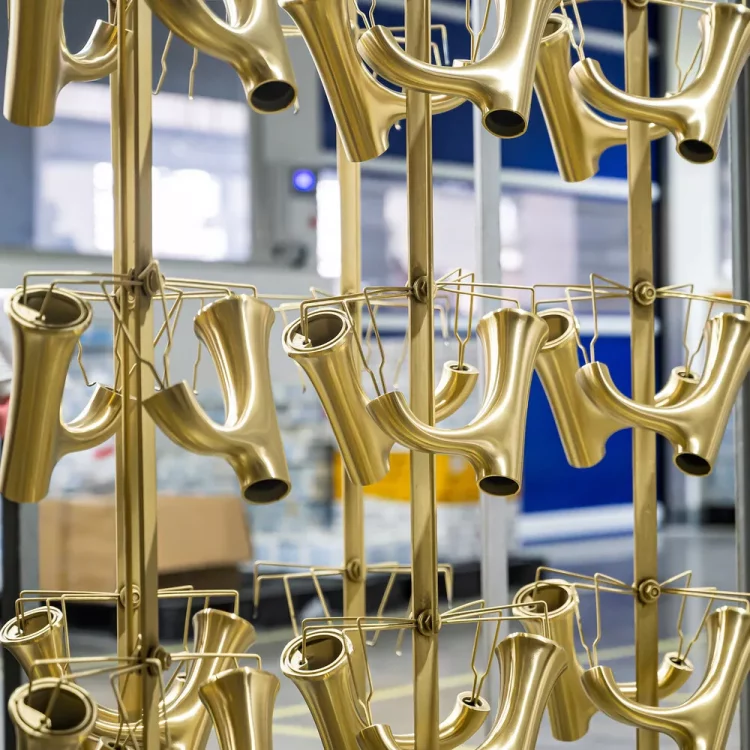
Zinc Die Casting Supplier
Custom Zamak 3 die cast parts with chrome plating manufactured by STICK INDUSTRY
1. European Regulatory Compliance: The First Requirement Every Supplier Must Meet
Before discussing unit price or delivery schedules, European buyers should first confirm whether a supplier can provide complete compliance documentation.
For zinc alloy die casting components used in European products, REACH and RoHS compliance are basic requirements rather than optional advantages. These regulations control restricted substances including lead, cadmium, mercury, and hexavalent chromium.
For example, RoHS limits lead content to ≤0.1% by weight in homogeneous materials and cadmium to ≤0.01%. These requirements do not only apply to the zinc alloy itself. They also involve plating layers, coatings, and surface treatment materials applied during production.
A professional zinc die casting supplier for European brands should be able to provide supporting documents, including:
- Raw material certificates
- REACH compliance reports
- RoHS testing reports
- Surface treatment test records
- Third-party laboratory verification
When evaluating suppliers, European buyers should request actual test reports rather than only receiving a simple declaration.
At STICK INDUSTRY, we normally prepare material and surface treatment documentation during the project approval stage, allowing customers to review compliance information before mass production begins.
Carbon Footprint and CBAM Requirements for Zinc Components
Environmental requirements are becoming an increasingly important factor in European sourcing decisions.
The Carbon Border Adjustment Mechanism (CBAM) is changing how importers evaluate overseas suppliers. For metal products, buyers are increasingly interested in understanding the embedded carbon generated during manufacturing.
For zinc die casting components, carbon performance is influenced by several factors:
- Energy source used during production
- Melting efficiency
- Recycling rate of zinc waste
- Equipment energy consumption
- Production process control
Compared with brass manufacturing, zinc alloy has some natural advantages.
Zinc melts at approximately 380–400°C, which is significantly lower than the melting temperature required for brass. A modern hot chamber die casting process can further improve energy efficiency because the melting and injection system is designed for continuous production.
Another advantage of zinc die casting is material recovery. Sprues and runners generated during casting can usually be recycled back into production, reducing material waste.
For European brands preparing future sustainability reports, asking a supplier:
“Can you provide carbon footprint data per kilogram of finished zinc component?”
is becoming an important part of supplier evaluation.
A supplier who understands carbon reporting requirements can help brands prepare for future environmental regulations instead of reacting after problems appear.
2. Material Expertise and Alloy Selection Capability
Choosing zinc alloy is not simply about selecting the lowest-cost material.
Different zinc alloys provide different levels of strength, hardness, casting performance, and plating response. A reliable zinc die casting manufacturer should recommend the appropriate alloy according to the product application.
The most commonly used zinc alloys include the Zamak family and ZA series.
For bathroom hardware, locks, and decorative components, the most common choices are Zamak 3 and Zamak 5.
Selecting the Right Zinc Alloy: Zamak 3 vs Zamak 5 vs ZA Series
Zamak 3
Zamak 3 is one of the most widely used zinc alloys in high-volume die casting production.
Its advantages include:
- Excellent casting flow
- Good dimensional stability
- Smooth surface quality
- Strong electroplating performance
For visible bathroom components such as:
- Faucet handles
- Escutcheons
- Shower brackets
- Decorative hardware
Zamak 3 is often the preferred choice because it provides a good balance between cost, appearance, and production reliability.
With proper tooling design and process control, critical dimensions can typically achieve tolerances around ±0.02 mm.
Zamak 5
Zamak 5 contains slightly higher alloying elements, providing improved hardness and mechanical strength compared with Zamak 3.
It is commonly selected for applications requiring more mechanical loading, such as:
- Lock housings
- Structural brackets
- Assembly components
Its plating performance is similar to Zamak 3, making it suitable for products where both appearance and durability are required.
ZA-8 and ZA-27
ZA alloys are generally selected when higher strength or wear resistance is needed.
Compared with standard Zamak alloys, they provide:
- Higher tensile strength
- Better bearing properties
- Improved wear resistance
However, they have lower casting fluidity, which makes them less common for complex high-volume bathroom hardware components.
Zamak Alloy Property Comparison
| Property | Zamak 3 | Zamak 5 | ZA-8 |
|---|---|---|---|
| Tensile Strength (MPa) | 283 | 328 | 374 |
| Yield Strength (MPa) | 221 | 269 | 290 |
| Elongation (%) | 10 | 7 | 6–8 |
| Hardness (Brinell) | 82 | 91 | 100–106 |
| Melting Range (°C) | 381–387 | 380–386 | 375–404 |
| Density (g/cm³) | 6.6 | 6.6 | 6.3 |
| Dimensional Tolerance | ±0.02–0.05 mm | ±0.02–0.05 mm | ±0.03–0.08 mm |
| Plating Response | Excellent | Excellent | Good |
| Typical Applications | Sanitaryware, decorative hardware | Lock housings, structural parts | Wear-resistant components |
A supplier with real engineering experience should not simply quote a material grade. They should explain why a specific alloy is suitable for your product, production volume, finishing requirement, and expected service life.
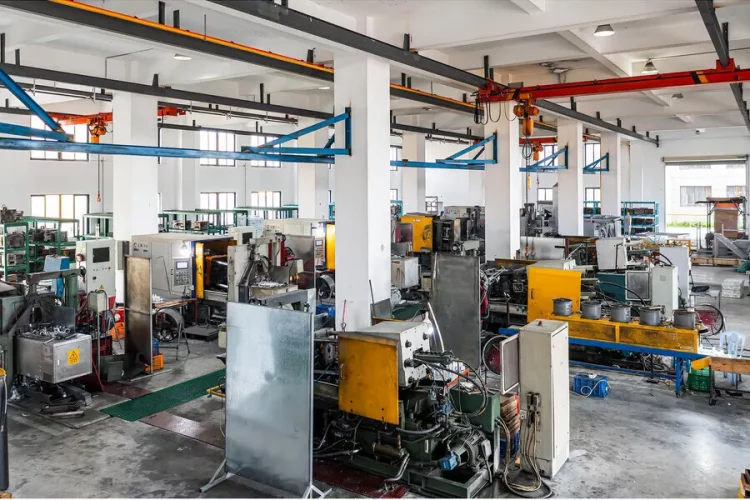
zinc die casting factory
3. Tooling Design & Design for Manufacturability (DFM)
A successful zinc die casting project usually starts long before the first production sample is made. The quality of the tooling design directly affects casting stability, surface appearance, dimensional accuracy, and overall project cost.
Many sourcing problems that appear during mass production actually come from decisions made during the early mold design stage.
For European brands working with a zinc die casting supplier, DFM (Design for Manufacturability) communication should be one of the first technical discussions before tooling production begins.
A capable supplier should have engineers who review the product design before mold manufacturing starts, including:
- Wall thickness distribution
- Draft angle requirements
- Gate location
- Parting line design
- Ejection system
- Potential air traps
- Machining allowance
- Surface finishing requirements
These details may seem small, but they directly influence the final product quality.
Why DFM Review Matters Before Mold Production
In our experience, many casting defects are not caused by the die casting machine itself. They often originate from product designs that were not optimized for the casting process.
For example:
- Uneven wall thickness can create shrinkage marks
- Poor gate positioning may cause flow lines or incomplete filling
- Insufficient draft angles can damage the mold or create difficult ejection
- Incorrect parting line design can increase finishing costs
A small adjustment during the engineering stage can prevent expensive modifications after the mold is completed.
For one custom zinc alloy component project, our engineering team identified a potential filling issue during the DFM review. By adjusting the gate position and improving the wall thickness transition, the customer avoided additional mold modification after sampling.
This is why experienced zinc alloy die casting manufacturers usually involve engineers at the beginning of the project instead of waiting until production problems occur.
Mold Flow Simulation and Process Prediction
Before cutting steel, advanced suppliers may use mold flow simulation software to predict:
- Metal filling behavior
- Air entrapment risks
- Cooling performance
- Potential porosity areas
- Gate and overflow optimization
Simulation cannot replace manufacturing experience, but it helps engineers make better decisions before investing in tooling.
When evaluating a supplier, European buyers should ask:
- Do you perform DFM reviews internally?
- Can your engineers suggest design improvements?
- Do you use mold flow analysis for complex components?
- How do you reduce porosity and surface defects?
A supplier that can answer these questions clearly usually has stronger project management capability.
4. Surface Finishing Options for Premium European Products
For many European bathroom and hardware brands, appearance quality is just as important as mechanical performance.
A zinc die cast component may have excellent dimensional accuracy, but poor surface treatment can still lead to customer complaints.
Common problems include:
- Chrome blistering
- Poor plating adhesion
- Uneven polishing marks
- Color inconsistency
- Corrosion after testing
This is why surface finishing capability should be considered when selecting a zinc die casting supplier.
Why In-House Finishing Capability Matters
The complete finishing process for zinc components often involves multiple steps:
- Automated polishing
- Surface preparation
- Copper strike layer
- Semi-bright nickel plating
- Bright nickel plating
- Chrome coating
- PVD coating or powder coating (depending on design requirements)
When casting and finishing are controlled by different suppliers, communication problems can easily occur.
For example:
- A casting defect may be blamed on polishing
- A plating problem may be caused by surface contamination
- Color differences may appear between production batches
Having casting and finishing processes under better coordination helps reduce these risks.
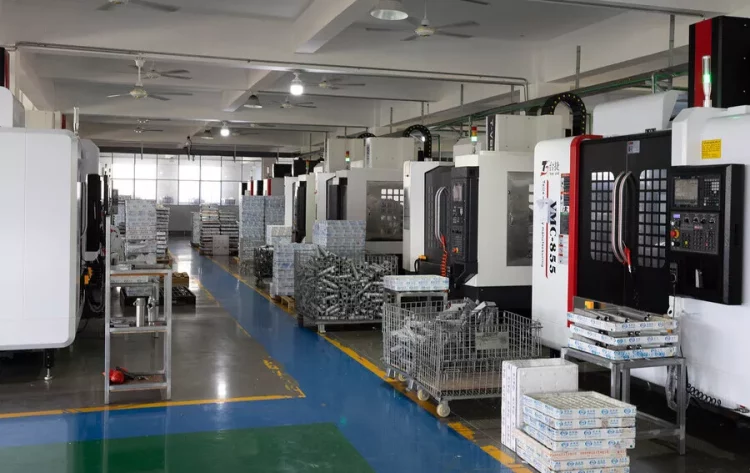
At STICK INDUSTRY, our integrated production capability includes zinc die casting, polishing, electroplating, PVD coating, powder coating, and CNC machining. This allows engineering teams to monitor quality throughout the complete manufacturing process.
Common Surface Finishing Options for Zinc Die Cast Parts
Chrome Plating
Chrome remains one of the most popular finishes for bathroom hardware because of:
- High brightness
- Good hardness
- Easy cleaning
- Classic appearance
It is widely used for:
- Faucet handles
- Shower accessories
- Bathroom brackets
- Decorative hardware
PVD Coating
For premium products, PVD finishes are increasingly popular.
Common colors include:
- Brushed gold
- Rose gold
- Gunmetal
- Black titanium
PVD provides a premium appearance and improved surface durability compared with traditional decorative finishes.
Powder Coating
Powder coating is commonly selected for:
- Matte black hardware
- White bathroom accessories
- Custom RAL colors
It provides good coverage and allows brands to create unique product appearances.
Surface Quality Testing
A professional supplier should provide measurable quality data instead of only visual inspection.
Typical testing includes:
- Salt spray testing
- XRF coating thickness analysis
- Adhesion testing
- Color comparison
- Surface roughness measurement
For high-end European applications, many buyers require 500+ hours of neutral salt spray testing depending on the product specification.
5. Quality Assurance Systems & Precision Tolerances
ISO 9001 certification is a useful starting point, but it does not fully represent a supplier’s manufacturing capability.
What matters more is how quality is controlled during daily production.
A reliable zinc die casting manufacturer should have clear inspection procedures from raw material preparation to final shipment.
Key Quality Questions European Buyers Should Ask
Before approving a supplier, procurement teams should understand:
1. Material Control
How often is zinc alloy composition tested?
Professional factories usually verify alloy composition through:
- Optical emission spectrometry
- Material certificates
- Incoming inspection procedures
This ensures that the alloy remains within specification during production.
2. Casting Process Control
Important production parameters include:
- Injection pressure
- Filling speed
- Die temperature
- Cycle time
- Holding pressure
Stable control of these factors reduces:
- Porosity
- Short shots
- Flash defects
- Dimensional variation
3. Dimensional Inspection Capability
Depending on product requirements, suppliers may use:
- CMM (Coordinate Measuring Machine)
- Optical measurement systems
- Digital calipers
- Custom inspection gauges
For precision components, measurement capability is especially important because small dimensional changes can affect assembly performance.
4. Plating Quality Verification
For decorative zinc components, suppliers should perform:
- Adhesion tests
- Thermal shock tests
- Cross-hatch tests
- Salt spray testing
These checks help ensure that the final product maintains appearance and durability after long-term use.
A supplier with mature quality management should be able to provide production records, inspection reports, and improvement actions when problems occur.
Quality is not only about finding defective parts at the end of production. It is about preventing defects from happening in the first place.
6. Total Cost of Ownership (TCO) vs. Piece Price
When European companies select a zinc die casting supplier, the lowest unit price is not always the most cost-effective option.
Many procurement teams initially compare only the quotation price. However, the real manufacturing cost includes much more than the price shown on the purchase order.
A cheaper component can create additional expenses through:
- Higher rejection rates
- Additional inspection costs
- Production delays
- Rework requirements
- Customer complaints
- Logistics problems
This is why experienced buyers increasingly evaluate suppliers based on Total Cost of Ownership (TCO) rather than only piece price.
Key Factors That Influence TCO in Zinc Die Casting
1. Material Efficiency
One major advantage of zinc die casting compared with traditional brass machining is material utilization.
Brass components often require significant machining operations, creating large amounts of metal waste.
Zinc die casting uses a near-net-shape manufacturing process. Sprues and runners generated during casting can usually be recycled, allowing factories to reuse material efficiently.
For many applications, zinc die casting can reduce material waste significantly compared with machining-intensive processes.
2. Lower Energy Consumption
The melting temperature of zinc alloy is lower than brass and many aluminum alloys.
Because zinc melts at approximately 380–400°C, production generally requires less thermal energy compared with higher-temperature metal processes.
For European brands focusing on sustainability goals, lower energy consumption can contribute to:
- Reduced manufacturing carbon footprint
- Better environmental reporting
- More competitive product positioning
3. Tooling Life and Production Stability
Tooling investment is an important consideration in die casting projects.
A properly designed and maintained zinc die casting mold can typically achieve hundreds of thousands of production cycles before requiring major refurbishment.
The actual lifespan depends on:
- Alloy type
- Mold design
- Production parameters
- Maintenance frequency
- Cooling system design
A supplier with strong tooling management can spread mold costs across larger production volumes, reducing the final component cost.
4. Manufacturing Location and Supply Chain Flexibility
Global sourcing conditions are changing quickly.
Factors such as:
- Import tariffs
- Transportation costs
- Regional supply risks
- Customer delivery requirements
are becoming increasingly important.
Suppliers with manufacturing flexibility in different regions can provide additional options for international customers.
For example, having production capability in both China and Vietnam can help brands evaluate different supply chain strategies depending on market conditions.
5. Quality Control Cost
Quality problems create hidden costs.
A component that requires additional sorting, re-plating, or re-production can quickly eliminate the initial price advantage.
For this reason, suppliers with:
- In-house finishing
- Process control systems
- Experienced engineers
- Complete inspection procedures
often provide better long-term value even if their initial quotation is not the lowest.
When TCO is calculated correctly, a reliable zinc alloy die casting manufacturer with integrated production capability can often outperform a low-cost supplier that focuses only on reducing the unit price.
Checklist: Questions European Sourcing Managers Should Ask Zinc Die Casting Suppliers
Before starting a long-term partnership, European buyers should evaluate suppliers from five key areas.
Compliance
Can you provide third-party REACH and RoHS test reports?
A professional supplier should have updated compliance documentation for:
- Zinc alloy materials
- Plating processes
- Surface coatings
Can you provide carbon footprint information for zinc components?
European environmental regulations are increasing, and suppliers should understand sustainability requirements.
How do you manage plating wastewater and environmental control?
Responsible suppliers should have proper treatment systems and environmental management procedures.
Engineering Capability
Will engineers review my product design before tooling production?
Early engineering communication can prevent expensive mold modifications.
Do you perform DFM analysis before mold manufacturing?
A good supplier should identify potential casting problems before production begins.
What dimensional tolerance can you achieve?
For precision components, suppliers should clearly define achievable tolerances based on:
- Product geometry
- Alloy selection
- Tooling condition
- Inspection method
Quality Management
What production quality data can you provide?
Examples include:
- Inspection reports
- SPC records
- Material test results
- Process monitoring data
How do you test plating performance?
Ask about:
- Salt spray testing
- Adhesion testing
- Coating thickness measurement
How do you handle quality problems?
A mature supplier should have a clear corrective action process.
Production Capability
Do you have in-house casting and finishing?
Integrated production helps reduce communication issues between different suppliers.
How do you handle increasing order volumes?
Understanding factory capacity and production planning is important before placing large orders.
Can production locations be adjusted if market conditions change?
Supply chain flexibility is becoming increasingly valuable.
Cost Structure
Can you provide a complete TCO analysis?
A professional supplier should explain cost factors including:
- Material usage
- Tooling investment
- Surface treatment
- Quality control
- Logistics
What are your long-term cooperation terms?
Stable partnerships usually require clear communication about:
- Payment terms
- Forecast planning
- Capacity reservation
Conclusion: Choosing the Right Zinc Die Casting Partner for European Brands
European brands face increasing challenges when sourcing metal components.
Customers expect:
- Consistent appearance quality
- Reliable product performance
- Environmental responsibility
- Transparent manufacturing information
For bathroom hardware, locks, and decorative components, zinc alloy die casting has become an important alternative manufacturing solution because it combines:
- Design flexibility
- Excellent surface finishing capability
- Competitive production cost
- Efficient material utilization
However, the final result depends heavily on choosing the right manufacturing partner.
A capable zinc die casting supplier should not only provide production capacity. They should support customers through:
- Engineering development
- Material selection
- Mold design
- Surface finishing
- Quality verification
- Supply chain management
About STICK INDUSTRY
STICK INDUSTRY specializes in custom zinc alloy die casting components and integrated manufacturing solutions.
Our production capabilities include:
- Zinc die casting
- Plastic injection molding
- CNC machining
- Electroplating
- PVD coating
- Powder coating
- Assembly services
With manufacturing facilities in China and Vietnam, we support international brands requiring stable quality, competitive production costs, and flexible supply chain solutions.
Our zinc components are supplied for applications including:
- Bathroom hardware
- Lock components
- Decorative hardware
- Precision industrial parts
We provide customers with:
- Material documentation
- Quality inspection reports
- Surface testing records
- Engineering support
If you are evaluating a new zinc die casting manufacturer for your next project, we welcome the opportunity to discuss your requirements and provide technical support.
Frequently Asked Questions
Is zinc alloy better than brass for bathroom fittings?
For many decorative bathroom components, zinc alloy provides an excellent balance between appearance, performance, and cost.
Components such as:
- Faucet handles
- Shower brackets
- Escutcheons
- Decorative covers
can often use zinc alloy successfully.
However, components that directly contact pressurized water, such as internal valve bodies, may require different materials depending on application requirements.
Can zinc alloy replace brass in faucets?
Yes, in many external faucet components.
Many manufacturers use zinc alloy for:
- Handles
- Covers
- Decorative structures
while keeping internal water-contact components made from brass or other suitable materials.
This allows brands to reduce cost while maintaining premium appearance.
How can bathroom hardware manufacturers reduce costs without reducing quality?
One effective approach is replacing some machined brass components with zinc die cast parts.
Advantages include:
- Lower material waste
- Faster production cycles
- Lower energy consumption
- More flexible product designs
When combined with proper plating and quality control, zinc alloy can achieve the appearance requirements expected in premium bathroom products.
What is the best zinc alloy for bathroom accessories?
For many high-volume bathroom accessories, Zamak 3 is commonly selected because it offers:
- Excellent casting performance
- Good dimensional stability
- Strong plating compatibility
For applications requiring higher strength, Zamak 5 may be a better option.
How long does a zinc die casting mold last?
The lifespan depends on:
- Mold design
- Production conditions
- Maintenance quality
- Component complexity
A well-managed zinc die casting tool can often produce hundreds of thousands of cycles before major refurbishment.
What surface finishes are available for zinc die cast parts?
Common finishing options include:
- Bright chrome
- Satin nickel
- Brushed nickel
- Gunmetal
- PVD gold
- Rose gold
- Black finishes
- Powder coating in custom RAL colors
The correct finish depends on the product design, market positioning, and durability requirements.
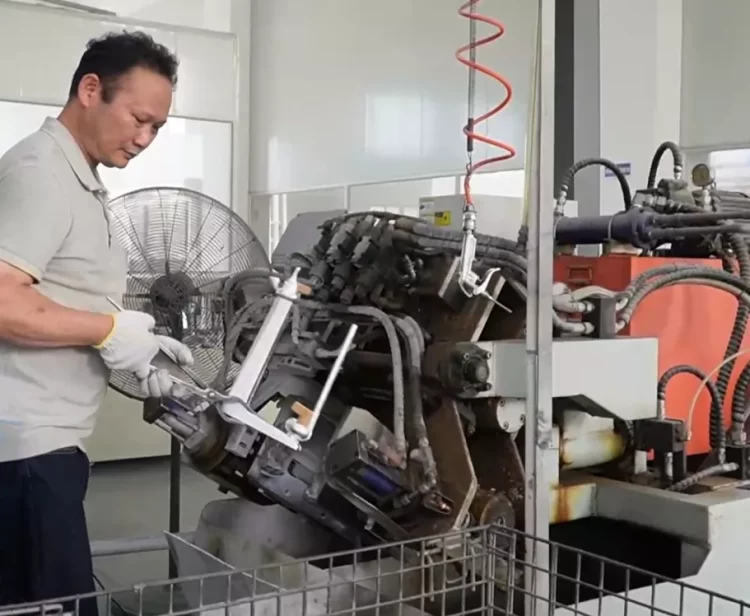
Zinc alloy die casting manufacture
How To Find A Reliable Zinc Die Casting Supplier?
If you are looking for a reliable zinc die casting supplier for your next project, please contact our team for technical discussion, samples, quality documentation, and quotation.
XIAMEN STICK INDUSTRY CO., LTD.
🌐 Website:
www.zamakdiecasting.com
📧 Email:
contact@stickindustry.com
Request Your Zinc Die Casting Project Review
Send us your:
- 2D/3D drawings
- Product samples
- Material requirements
- Surface finishing requirements
- Estimated annual volume
Our engineering team will review your project and provide a practical manufacturing solution.